Introduction
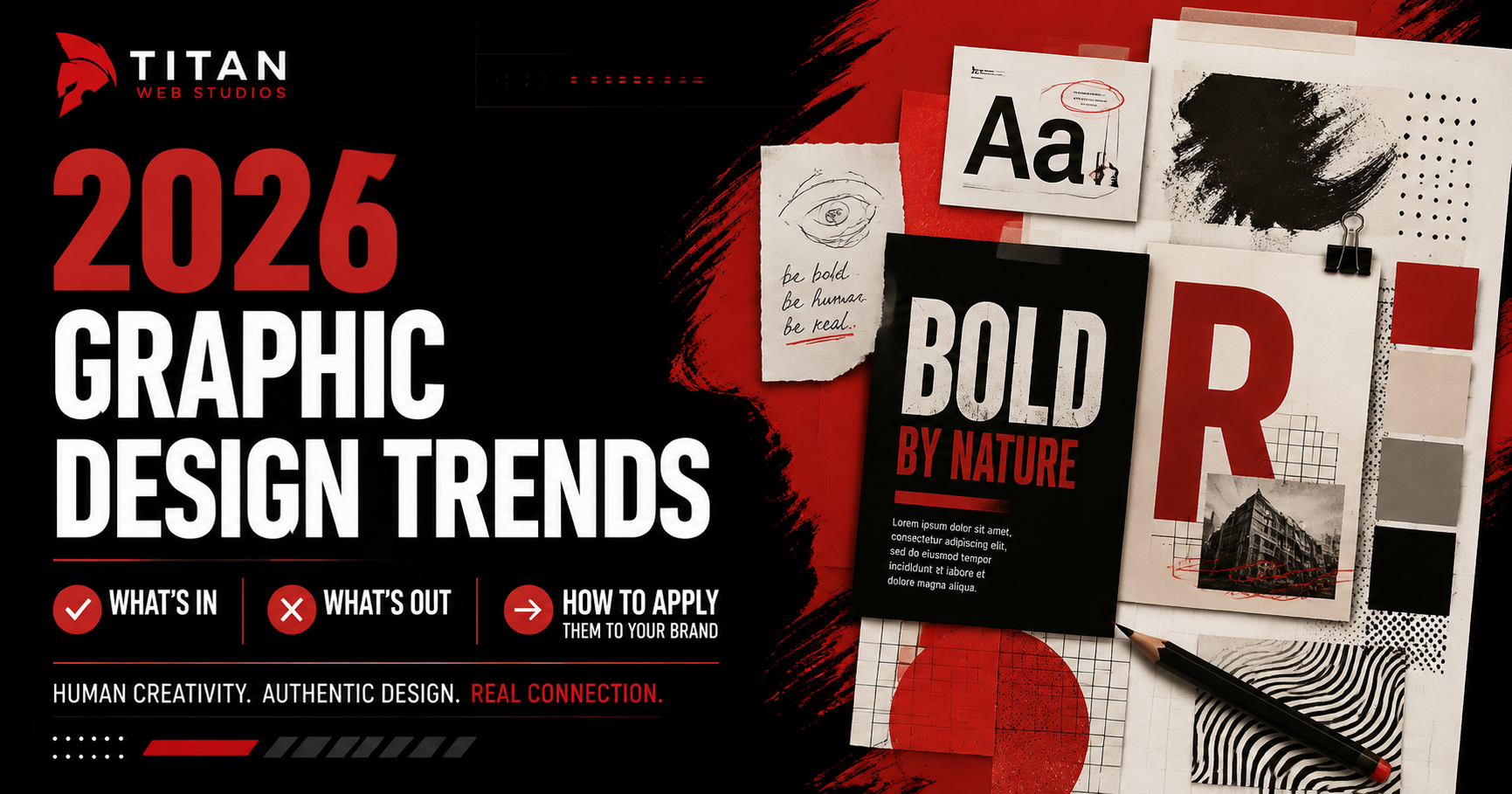
The 2026 graphic design trend is not about chasing perfection. It is about reclaiming what makes visual communication human. Years of algorithm-driven perfection on every single screen have made way for an entirely new approach. Designers are embracing textures, warmth, and uniqueness in a world that is becoming increasingly artificial. It's the most prominent change in design creativity in a decade, and it influences the way in which brands communicate with people.
At Titan Web Studios, we have seen this transition taking place through many projects with our clients. Industry trends in graphic design for 2026 show that it is the time of intentional designs and emotions, not automation and perfection. The global graphic design services market size in 2026 is expected to reach $57 billion, and its revenue grew by 2.7% compound annual growth over the last five years. Over 507,000 graphic designers work in the US, and 75% of them use AI technologies while working. Paradoxically, the more available AI becomes, the more valuable human skills become. It is the major contradiction of 2026.
So what does it mean for your brand? We will explain what is in, what is out, and how to implement current graphic design trends in branding.
What Is In: The Graphic Design Trends Defining 2026
Imperfect by Design
The single most dominant graphic design trend of 2026 is the deliberate embrace of imperfection. Canva’s global insights, drawn from a survey of 1,000 creators and billions of designs, declare this the “Year of Imperfect by Design”. It is all about letting go of the pressure of perfection and going back to what is truly essential: imagination. "Eighty percent of creators agree that 2026 will be the year where they get their creative power back." This idea can be seen in the form of hand-drawn images, rough surfaces, and physical collages. Graham Sykes, global executive creative director at Landor, calls this “Anti-AI Crafting” and describes it as design’s response to an algorithm-saturated world. When algorithms flood the world with flawless flatness, the marks of the maker become signal. This is not nostalgia; it is differentiation.
Bold Minimalism
Minimalism will still be around in 2026; however, it will be a new kind of minimalism that will become more and more confident. Bold minimalism in graphic design will include a lot of white space, great fonts, and well-structured layouts. This modern design trend is based on the idea of stripping down everything unnecessary.
The thing that distinguishes bold minimalism from other kinds of minimalism is its confidence. It is not shy. It uses oversized sans-serifs, geometric precision, and stark contrasts to command attention. For brands, this means communicating more with less and letting typography carry the weight of your message.
Tactile and Sensory Design
In 2026, graphic design is meant to be felt. According to Adobe’s Creative Trends Forecast for 2026, sensory experience is an important aspect of engagement. Textures like puffy, soft, and squishy are growing common, alongside highly realistic objects with fun distortions. Humans crave to be submerged into an experience that will make an impression on them.
This trend consists of effects of glass blocks with vertical ribbing and refraction. It includes multi-layered textures, gradient blurring, and transparency, which create the impression of depth. This way, the design becomes physically three-dimensional and undoubtedly human.
Midcentury Modern and Retro Futurism
There is currently a re-appreciation of mid-century modern graphic design within the culture. This style uses the geometric poster aesthetic from Swiss modernism and adds to it the gloss and optimism of futuristic design. The use of chrome, science fiction fonts, and a color palette that combines space-age neon with pastels creates this style.
The reason brands are taking notice of this style is that it creates optimism and nostalgia at the same time. For businesses wanting to appear established yet innovative, midcentury modern influences offer a compelling visual language.
Hero Characters and Exploded Typography
Typography is taking center stage in 2026. The “Hero Characters” trend treats single letters as dominating sculptural objects that anchor layouts. Designers are pulling letters out of the alphabet and scaling them to dramatic scale. This puts personality back into typography through exploded scale and singular focus.
Paired with exaggerated, playful letterforms, oversized sans-serifs, bubbly and puffy fonts, handwritten scripts, typography in 2026 is anything but boring. It is expressive, absurd, and impossible to ignore.
What Is Out: The Graphic Design Styles Losing Relevance
Flawless Digital Perfection
The trend of hyper-polished, AI-generated aesthetics that has been prominent for the past few years is starting to fade away. Consumers are easily able to detect whether an image is AI-generated because of its overly smooth, overly symmetrical, and overly clinical appearance. Unprofessional design is more impactful for younger generations, where 54% of Gen Z and 53% of millennials stay away from brands because of such poor design.
The paradox is that the more perfect it becomes to produce content through AI, the less relevant it becomes to strive for perfection.
Generic Sans-Serif Uniformity
The age of harmless sans-serif fonts is coming to an end. People are drawn to minimalistic designs, but minimalistic does not imply dull. Current trends in graphic design display a trend towards serif fonts, organized layouts, and simple logos rather than eye-catching graphics and playful fonts.
Uniformity is out. Personality is in. Brands that blend into the visual noise will be ignored. Those that take creative risks will be remembered.
Overly Complex Maximalism Without Purpose
While maximalist, chaotic layouts appear in Adobe’s trend forecast, the key distinction is intentionality. The 2026 graphic design trend is not about clutter for the sake of clutter. It is about controlled chaos with meaning. Off-grid compositions and bold, flat color palettes with no gradients define the “Naive Design” trend, but even this serves a purpose: it feels handmade and human.
Unstructured maximalism that confuses rather than engages is out. Design must have a point of view.
How to Implement Graphic Design Trends into Your Brand Identity
Implementing the 2026 graphic design trend into your brand doesn’t mean you have to start from scratch. Instead, it’s all about strategy. Here is what we do for our clients at Titan Web Studios when implementing these trends.
Start with Texture
Bring physicality to your virtual world. Make use of layers, grain, and texture on your site, on your social graphics, and marketing collateral. Layered graphic searches went up 14% and pattern searches 9% in 2026. It is more than just style; it is a reaction to what consumers want.
Embrace Imperfection on Purpose
Perfect is boring. Imperfect is memorable. Use hand-drawn illustrations, physical collage, or analog textures in your brand assets. Show the process behind your work. Burberry’s Cross-Stitch Knight Life campaign merged classic craftsmanship with modern fashion through cross-stitched visuals and handcrafted textile work. Your brand can do the same on a smaller scale.
Rethink Your Typography
Your brand’s typography is your voice. For 2026, that voice must have courage. Look into bigger letters, serif fonts, or handwriting for the unique voice. If your branding is using the same sans-serif as your competition, you will be nowhere. Hero characters, single letters, can anchor your logo or packaging with striking visual impact.
Balance Bold Minimalism with Warmth
Bold minimalism graphic design does not mean cold minimalism. Combine clean designs with warm colors and human imagery. Make use of negative space. Ensure that your design has breathing room while still making a powerful impression. This kind of graphic design is very effective for B2B brands because it is both professional and approachable.
Add Motion and Interaction
Graphic design in 2026 is not just about static images. There will be many cases where motion graphics and kinetic typography come into play. Even simple things like hover effects can make the biggest difference in creating dynamic design.
Business Case for Adopting 2026 Trends
These trends are not mere aesthetic preferences; they are reactions to market realities. The worldwide graphic design market is expected to reach $78.3 billion by 2032. Brands that evolve along with graphic design industry trends get noticed more, establish stronger emotional bonds, and distinguish themselves from others in crowded spaces.
Here is a fact: 48% of people think AI is going to either replace designers or take care of most design jobs through its automation. However, 80% of artists claim that 2026 is the year when they will reclaim their creative power. The winning companies will be able to leverage both AI and human creativity. In other words, they will use AI as an assistant rather than as a competitor and opt for design styles that will sound truly human.
It is at Titan Web Studios that we witness the power of adopting current graphic design trends in real life. The clients, who embrace bold minimalism, tactility, and imperfection, are able to increase engagement rates, brand recall, and form stronger customer relationships. The numbers confirm our observations: personality sells, and sameness does not.
Frequently Asked Questions
What is the biggest graphic design trend of 2026?
The biggest graphic design trend of 2026 is "Imperfect by Design," which encourages designers to embrace human imperfections, touch, texture, and craftsmanship instead of perfect and machine-friendly designs.
How can small businesses utilize 2026 graphic design trends without a large budget?
Small businesses should take small steps at first. Hand-draw elements for social media images, use textured backgrounds on websites, and play with typography. There are free templates for 2026 trends available at Canva. Focus only on one or two trends corresponding to the company's personality instead of implementing all of them at once.
Does minimalism have its place in 2026?
Yes, but not the old minimalism. Bold minimalism is in high demand now. Clean layout and powerful typography complement each other. There is negative space and strong graphic elements in the design. Modern graphic design is saying a lot with very little.
How does AI influence 2026 graphic design trends?
AI is an indispensable partner in 2026 workflows, with 77% of designers calling it an “indispensable partner.” Yet the leading trend is the employment of AI from a human perspective by adapting it to the expression of one’s personal style rather than letting it decide what’s aesthetically pleasing. Successful brands find the best mix of AI efficiency and human touch.
How do I choose the right graphic design trend for my brand?
Look at the personality of your brand, its audience, and its industry. Bold minimalism will work for professional services and B2B companies. Textured, slightly imperfect designs will suit lifestyle and creative brands, as well as consumer goods brands. Midcentury modern influence will fit those who would like to look positive and traditional.
Conclusion
The 2026 graphic design trend boils down to one single factor: being human. In today’s age of artificial intelligence, the only value your brand can add in creating beautiful visuals is authenticity. Texture, flaws, bold typography, and tactile experiences are not just fads. They are the language of a generation that demands authentic connection.
At Titan Web Studios, we make sure brands stay ahead in this changing scenario by developing strategies that are both visionary and pragmatic. No matter whether you have an established brand image or a completely new brand, 2026 design trends give you a tremendous chance to differentiate. The real challenge for you is how boldly you incorporate them in your branding effort.